Leaving a familiar home is more than a practical job. When moving to a smaller home, sheltered housing or a care facility, you have to make choices about a lifetime of belongings. Ontruiming Utrecht helps empty the home left behind or clear a care home room. We coordinate the selection and access with your contact person. You and your family decide what is kept; we take the agreed heavy work off your hands.
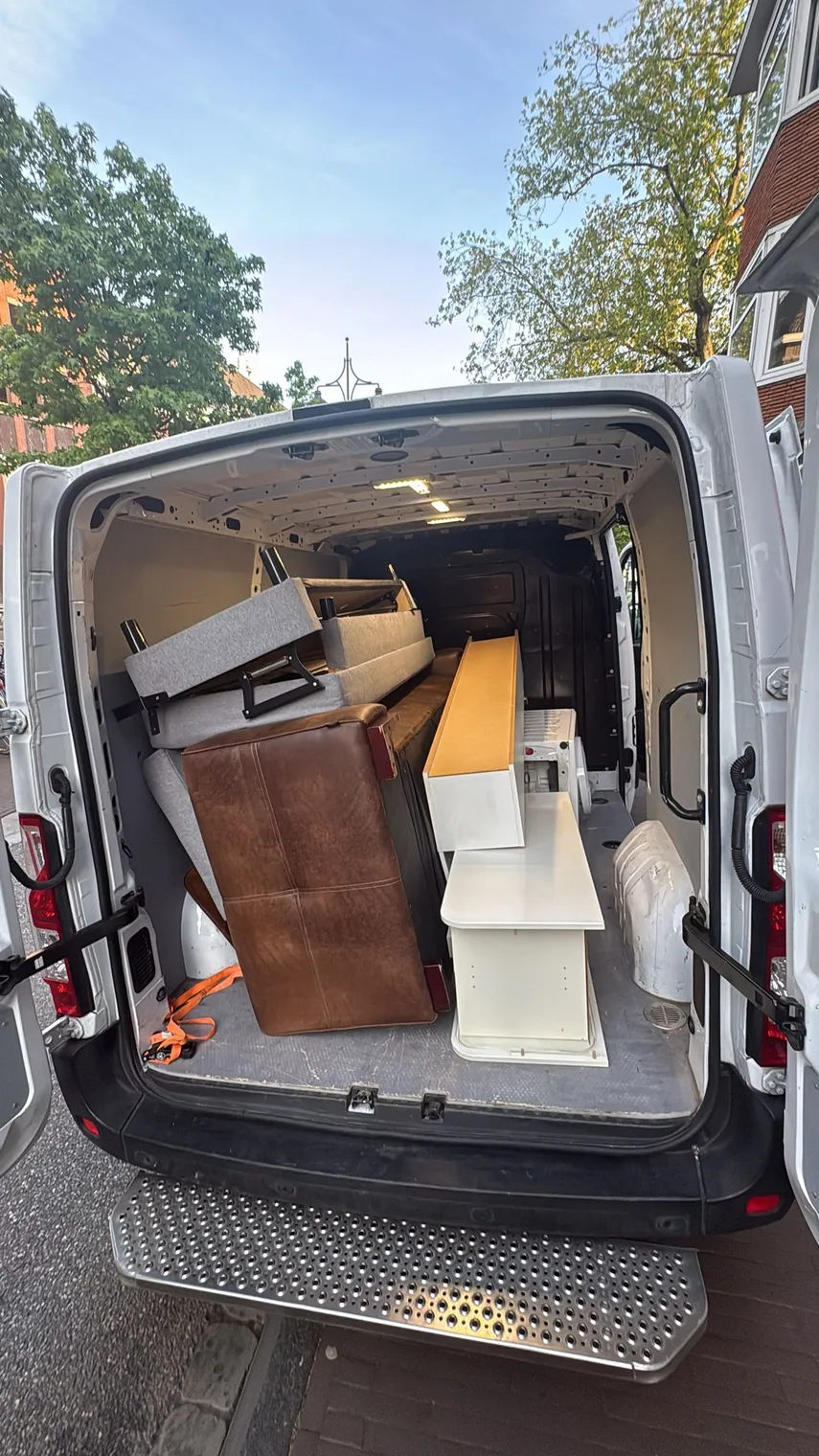
Furniture and loose parts together in the cargo area. Photo from the existing images on our website.
Calculate your collection price
Want to have furniture collected? Select the items you want removed below and enter the quantity. You will instantly see your collection price, including dismantling, carrying and disposal. Easily request your collection appointment and only pay once your furniture has been removed and you are satisfied.
Banken
Kasten
Bedden
Tafels
Stoelen
Witgoed
Tuin
Losse spullen
Deze categorie is momenteel leeg
Het lijkt erop dat we nog geen producten hebben toegevoegd. U kunt nu naar de homepagina gaan, maar zorg ervoor dat u later nog eens terugkomt!
Downsizing, without everything having to happen at once
Perhaps you're moving yourself, or helping your father, mother or another relative. Between furnishing the new home and handing over the old one, the amount of work can be overwhelming. A clear order helps: first decide what comes along, then have the remaining contents removed.
A familiar armchair, photo albums or a small cabinet can mean a lot. Set them aside before the clearance. Discuss with the resident who makes decisions and who is reachable on collection day. That way no hasty choices about personal belongings have to be made while emptying.
Moving to a smaller home
Measure in advance which furniture fits. Have large cabinets, extra beds and duplicate furniture that stay behind added to the removal list.
Transition to a care facility
First agree which furnishings are needed and allowed at the new place. The clearance of the old home can then be prepared based on the agreed selection.
Family helping from a distance
Take photos per room and work with one list. One contact person who bundles the agreements prevents conflicting instructions on the day of the work.
Partly emptying a home
Sometimes it's only about a guest room, attic or furniture that has become too heavy. Even then, you can ask for help without booking a full clearance.
Peace of mind and practical help from Ontruiming Utrecht
Stay in control yourself
Nothing is decided on a quick impression of what may go. The agreed selection is the starting point, with clear attention to the items being kept.
Relieve your family
Relatives don't have to take beds apart, carry cabinets down from upper floors or organise removal trips themselves. The agreed physical work is taken over.
Know where you stand in advance
We discuss quantity, access and work before the date is fixed. Additional wishes also get a place in the agreement.
A clear end to the job
With a full clearance, we hand over the agreed rooms broom-clean. That makes the final check before the key handover straightforward.
Careful preparation in four steps
Discuss the resident's wishes Decide what goes to the new home and what stays with family. Give personal belongings a safe, separate place.
Show the remaining contents Send photos and name large furniture, appliances and any storage rooms. Report the floor and the route outside.
Make concrete agreements together Record the selection, contact person, work and deadline. Pass on the conditions of the landlord or residential facility.
Complete the old home After the agreed removal, you or your contact person check the rooms. Discuss any handover points based on the proposal.
What does emptying a senior home cost?
The price depends on what stays behind and how accessible the home is. A few pieces of furniture from a ground-floor home require less work than complete contents with an attic and narrow staircase. Dismantling and extra handover requirements also play a part.
Request a proposal as soon as the selection is clear enough. If the list changes because family is taking more furniture, pass that on before the work. That way the job can be adjusted to what actually needs removing.
Secure personal belongings first
Keep documents, medication, keys, photos and valuable keepsakes outside the removal zone. Also make sure aids that are still needed remain available. The clearance is not a substitute for organising the move or care at the new location.
Help with senior clearance in Utrecht and surroundings
Whether the old home is in Tuindorp, Zuilen, Lunetten or Vleuten: above all, tell us how the home can be accessed. Think of a shared entrance, caretaker, lift reservation or the distance to the parking spot. With your postcode and preferred date, we also discuss requests in surrounding towns.
Moving into a care home and emptying a care home are different moments, but call for the same care in selecting personal belongings. With a move, part of the furnishings goes to the new home and the rest stays in the old house. When clearing a care home, the resident may be moving to another location or family may need to hand back the room. So clearly state in your request which home or room must be emptied and what happens to the items being kept.
Discuss with the residential facility which furniture belongs to the resident and which belongs to the room. A bed, cabinet or curtain may belong to the facility, even if the resident uses it daily. Don't automatically put those items on the removal list. Ask for an overview of what must stay and what must be removed. We base the work on the agreed selection. Clear information prevents a staff member or relative from still having to work out who owns what on the day of the work.
In a care home, the presence of other residents and the use of shared corridors play a role. Pass on who grants access, which entrance must be used and whether there are agreements about the lift. Coordinate the preferred time of the work with the facility and mention it in the request. The clearance must fit practically with the situation in the building. A small room may seem simple, while reaching that room and taking out heavy furniture still requires extra preparation.
Personal choices first, furniture removal afterwards
A piece of furniture may seem ordinary and still carry an important memory. So take time with the resident or authorised contact person to decide what is kept. You don't need a decision on every small item at the first conversation. It does help to set doubtful items aside. That way the list of items that may definitely go becomes clearer, without anyone having to make a choice under pressure during the lifting.
Start with items needed in the coming days. Think of clothing, glasses, keys, chargers and daily personal belongings. Store documents and keepsakes in a recognisable place outside the removal zone. Keep aids that are still in use accessible. Don't only say which large furniture must stay, but also where the boxes of items to keep are. A room designated as a keep zone must mean the same to everyone. Write that agreement on the door if needed.
When several relatives help, one shared overview is more useful than separate messages with different instructions. Let one contact person collect and confirm changes. That doesn't mean that person makes all choices alone, but it does give the crew a clear point of contact. If a piece of furniture is still under discussion, it stays out of the final removal until it has been decided. That keeps control with those involved, and the physical work is done based on agreements they recognise.
The furnishing of the new home as a starting point
When downsizing, the available space often determines what comes along. Measure the new room, the passages and the furniture the resident would like to keep. A familiar armchair or small table may fit, while the large wall cabinet no longer has a place. At a care facility, also ask which furnishings are already there. A list of available furniture helps prevent you from keeping items that would be duplicated or unusable at the new place.
Besides dimensions, also look at the desired daily layout. Where will the favourite chair go and which cabinet is really used? You don't have to recreate the old home completely to make a familiar environment. You make those choices together with the resident and the contact persons involved. Our role is removing the inventory that stays behind as agreed. Transport and furnishing at the new location are a separate question and aren't automatically included in a clearance job.
Preferably plan the removal once it's clear which furniture has reached its new destination or is available separately. If the move happens in steps, state per item when it's free for removal. A bed still in use, for example, shouldn't be assumed available on the same day as an unused cabinet. A logical order prevents necessary items from disappearing too early and keeps the overview during what is already a busy transition.
Emptying a care room with the residential facility's agreements
Ask in advance what handover the facility expects. Must only personal furniture and items go, or are there additional agreements about curtains, floor coverings or wall decoration? Include that information in your request. The term handing over empty can be interpreted differently per situation. So we agree which rooms and items belong to the job. With a full clearance, we hand over the agreed space broom-clean. Other work is discussed separately.
Keep borrowed or rented aids out of the ordinary removal. There may be a supplier who collects a bed or aid. Record who arranges that and when the aid becomes available. We don't decide whether an aid is still needed or which party it must go back to. Name the ownership situation and the existing agreement, so the clearance work can follow on from it. It helps if the contact person on site is also aware of that schedule.
If the care home needs to be emptied after a death, arranging practical matters can be hard. Don't make the selection more complicated than necessary: secure personal belongings first, record the facility's property and then agree the removal. For information about that specific situation, you can read more under house clearance after a death. This page stays focused on senior homes, the transition to care living and the practical handover of the living space.
Arranging help when family lives far away
Not everyone can be at the old home for several days. So work with photos per room and a list that can easily be shared. Give each photo a recognisable name, such as bedroom, storage room or living room. Show which furniture stays and which may go. An overview photo is handy for the quantity; a detail photo helps with a heavy or special piece of furniture. Have the contact person check whether the pictures still match the situation on the day of the work.
Agree who opens the home and who is reachable for questions. That can be a relative or another designated contact person, as long as the job and authority are clear. Just making a key available isn't always enough if doubt arises about a piece of furniture during the work. So choose someone who knows the final selection. Mention in advance when a contact person is only available at certain times. Then the practical handover can be taken into account when coordinating the appointment.
Also make agreements about the check afterwards. A contact person who is present can check together whether the agreed inventory has been removed. Use the same list as in the request and look at the separate rooms. For your own overview, you can keep photos of the empty rooms. If the landlord or residential facility checks later, it stays clear which work was done and which additional points may be picked up by another party.
Removing a few pieces of furniture or emptying the whole home
Not every senior clearance has to cover a whole home. Sometimes it's a large bed being replaced, a cabinet no longer needed or a guest room being rearranged. You can register that furniture separately. For an electric chair or adjustable bed, state the functions, dimensions and floor. Also show whether parts are attached to each other. We discuss the necessary dismantling and carrying in advance, so the request matches the actual inventory.
For ordinary furniture, you can use the calculator above this text. Choose the type and number that match the items and pass on special details separately. You'll find more explanation under having furniture and contents collected. Having a sofa removed is a clearly defined job, for example. When cabinets, beds, other contents and several rooms also need to go, a complete inventory makes the total request clearer.
A full house clearance is about the agreed end result per room. State whether the storage room, attic and balcony are included. Discuss extra handover requirements right away, so you don't discover afterwards that more work is needed before the key handover. On the page house clearance and broom-clean handover you'll find an explanation of that difference. The choice between separate furniture removal and a full clearance follows from what you need, not from the name you give the living space.
Calm preparation for the day of the work
Shortly before the appointment, check that the items to keep are outside the removal zone. Make the route to the exit accessible and report changes, such as a lift that's unavailable. You don't have to move heavy furniture to the hall yourself. Leave it in the agreed place and make sure it's clear which inventory is being taken. In a residential building with shared facilities, inform the building manager about the agreement for access and use of the passage.
The preferred date is important, but only becomes final once the work has been confirmed. So pass on a final handover date early and say which other appointments depend on it. Think of moving furniture being kept or the return of a borrowed bed. If a lot still needs sorting, say so honestly. A realistic schedule offers more peace of mind than an appointment where the selection has to be made during the clearance.
For your request, photos, the address, the floor, the preferred date and a clear description of the removal are enough as a starting point. Via contact with Ontruiming Utrecht also explain special circumstances around access. You decide together with those involved what leaves the home. We take care of the agreed dismantling, lifting, carrying and removal. That way your attention can stay with the resident, the family and carefully completing the transition to another home.
Answers for your request
Questions about clearing a senior home or care home
What should I pass on when a care home is being cleared?
Pass on the address, the room or home, the floor and the desired handover date. Make clear which furniture is personal property and which belongs to the residential facility and stays. Add photos of the inventory and the route outside. Mention the contact person who arranges access and any agreements about the lift or entrance. With that information, the work can be matched to the specific living space.
Can the room be emptied while an aid is collected later?
That's possible if the boundaries and order are clear in advance. State which aid stays outside our job, who arranges the return and when that party needs access. Keep the route to the aid clear and let all contact persons know what's been agreed. The removal of personal furniture is then a separate part of the overall handover. Do check whether the residential facility accepts that order before you finalise the schedule.
My mother is downsizing. Where do we start?
Start together with the new living space: which furniture fits and which personal belongings does she want to keep? Then make a list of what stays behind. With that list and photos, the clearance of the old home can be prepared.
Does the resident need to be there during the emptying?
Not in every situation, but agree in advance who provides access and answers questions on behalf of the resident. The wishes and permission must be clear before items are removed.
Can children or family arrange the request?
Yes, a relative can do the practical coordination. Preferably choose one contact person and make sure those involved agree on the selection. Personal choices are not made by the removal crew.
Is there room to sort things out first?
Plan the sorting before the agreed clearance day. That leaves time for memories and consultation without carrying already under way. If it's not yet settled what may go, let us know when scheduling.
What if the new home is much smaller?
Measure the rooms, passages and existing furniture. Then choose which pieces will actually come along. Remaining sofas, beds or cabinets can be registered separately for removal.
Do you also take a heavy riser recliner?
Report the type of chair, any electrical parts and the floor. Add photos, including of the route. A heavy recliner or riser chair needs a different assessment than an ordinary dining chair.
Can an electric bed be removed?
Pass on the dimensions, number of parts and electric functions. Discuss dismantling and disconnecting in advance. Don't loosen heavy parts on your own initiative if it's unclear how they can be moved safely.
Do you also move the items to the new home?
This request concerns emptying and removing the remaining contents. If you also want transport to another address, mention that separately. Don't assume a move is included in the clearance price.
How do we prevent keepsakes from being thrown away?
Put items to keep in a separate, clearly marked room or take them out of the home in advance. Use one final removal list. Resolve doubtful cases with the resident or contact person before the work begins.
Can the storage room and balcony be emptied too?
Yes, include those spaces in the request. List planters, garden furniture and stored items separately. Photos show whether there's extra carrying or special materials.
Do we need to help lift?
You don't have to do the agreed carrying yourself. Do arrange access and keep the route clear. Especially with heavy furniture, it's nice to have the physical removal taken care of.
Is the home then ready for the landlord?
That depends on the handover requirements. Broom-clean is not the same as painting, removing floors or a thorough clean. Have the requirements assessed in advance and record what will be done.
How quickly can a room be emptied after a move?
Pass on the preferred date and the quantity. We match the options to the available schedule and the work. The date is only certain after confirmation.
What if family later wants to keep a cabinet after all?
Report changes before the work begins and visibly adjust the selection. During the job, unclear or conflicting instructions can cause delays. Let one contact person confirm the final choice.
Can I prepare everything from another town?
Much practical information can be shared via photos and phone calls. Someone is still needed for access, decisions and the agreed check. Agree that role clearly in advance.
What should I send for a price proposal?
Send overview photos per room, a list of what may go, postcode, floor and lift information. Also pass on the last date for the key handover and any landlord requirements.
Completing the old home properly together
Feel free to share your situation: who is moving, what stays behind and when must the home be empty? With photos and one clear point of contact, we can organise the practical removal clearly.
Furniture collection and home clearance in Utrecht and nearby towns. From a single item to a complete home or business premises, with careful handling, clear agreements and a quote beforehand.
Furniture collection and home clearance in Utrecht and nearby towns. From a single item to a complete home or business premises, with careful handling, clear agreements and a quote beforehand.