Office clearance in Utrecht: room for your next workplace
New workstations, a move or a floor being given up? Old desks and filing cabinets don't disappear by themselves. Ontruiming Utrecht helps empty your office and remove the agreed office inventory. You organise the new work environment; we take care of the dismantling, carrying and loading.
Register workstations, meeting rooms and canteen together
Agree in advance which departments are available
Clear separation between removal and inventory to be kept
Also have a small amount of office furniture collected
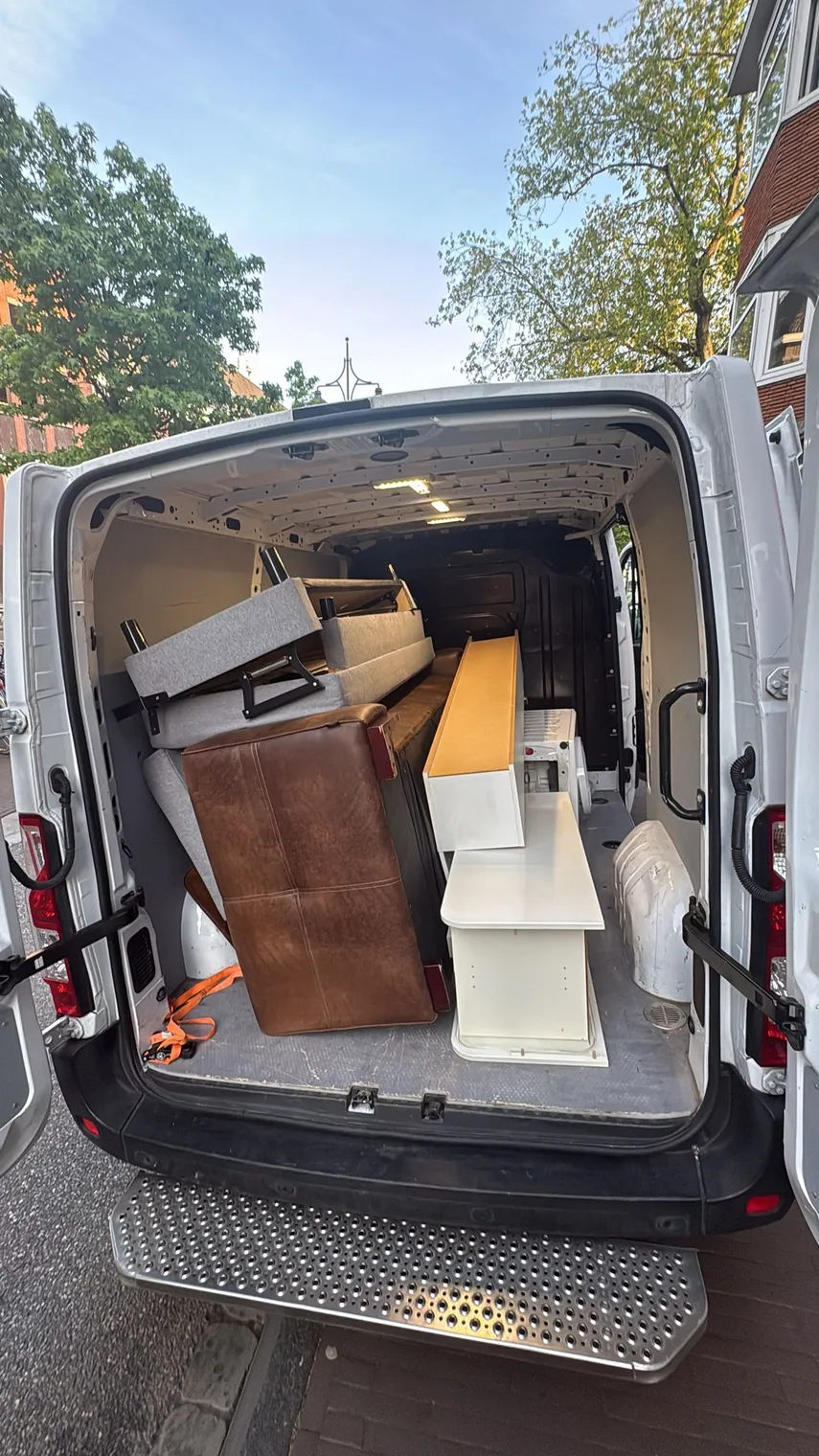
Furniture and loose parts together in the cargo area. Photo from the existing images on our website.
Calculate your collection price
Want to have furniture collected? Select the items you want removed below and enter the quantity. You will instantly see your collection price, including dismantling, carrying and disposal. Easily request your collection appointment and only pay once your furniture has been removed and you are satisfied.
Banken
Kasten
Bedden
Tafels
Stoelen
Witgoed
Tuin
Losse spullen
Deze categorie is momenteel leeg
Het lijkt erop dat we nog geen producten hebben toegevoegd. U kunt nu naar de homepagina gaan, maar zorg ervoor dat u later nog eens terugkomt!
From surplus desks to a well-organised office handover
Emptying an office is easier when the inventory has been recorded per zone. Count desks and chairs, photograph storage cabinets and note large meeting tables. Don't forget the reception desk, pantry furniture and the storage with old office supplies. That shows what quantity really needs to go.
Also make agreements with your IT manager and staff. Loose hardware, data carriers, cables and confidential files call for different choices than furniture. Clearly state what goes to a new location and what must stay out of the removal job.
Removing workstations
Loose desks, sit-stand desks, office chairs and drawer units: state the number and type. Report linked workbenches and electric functions separately.
Emptying meeting rooms
Large meeting tables and storage furniture don't always fit in a lift. Show the construction, so necessary dismantling can be discussed in advance.
Filing and supply cabinets
State whether cabinets are empty. Paper files, office supplies and heavy cabinet contents add extra volume and may require special processing.
Reception and staff areas
Benches, desks, coat racks and canteen tables can go on the same inventory list. Distinguish between loose furniture and fixed fittings.
The benefits of an office clearance through Ontruiming Utrecht
Staff can focus on their work
You don't need to organise an internal team for heavy furniture and removal trips. The agreed carrying and dismantling work is carried out separately.
Insight per room
A layout per department or room prevents leftover furniture from being forgotten. We discuss the complete list and any phasing.
Fewer separate tasks to arrange
Dismantling, removal and the agreed handover result are discussed together. You know in advance which parts fall within the job.
A suitable price for your inventory
Quantities, size and access form the basis. That gives you a proposal that fits the workstations and rooms that actually need emptying.
How an office clearance works
Make an inventory per department List desks, chairs, cabinets and other furniture. Add overview photos and state what stays.
Coordinate the building and schedule Pass on the goods lift, loading dock, access pass and any working hours. Mention the deadline of the move or end of the lease.
Arrange documents and IT separately Have authorised staff secure archives, computers and data carriers or register them separately. Record which furniture is then free for removal.
Have the office rooms emptied We carry out the agreed work. The designated contact person checks the empty rooms and the agreed broom-clean handover.
Costs of having an office cleared
The number of workstations gives a first impression, but not the whole picture. Twenty loose chairs are different from twenty linked desks with screen dividers. Weight, dismantling, cabinet contents and the route via stairs or lift determine how much work is needed.
Send quantities and photos. State whether the inventory is spread over several floors and whether loading is only possible in a certain time slot. For a few loose pieces of furniture, you can see the collection price; a complete office handover calls for a tailored proposal.
Furniture removal is not data destruction
Confidential files and data carriers must get suitable, separately agreed processing. Don't leave information in drawers, computers or printers without a clear approach. With an ordinary clearance job, we make no promise of certified destruction.
Having an office emptied in Utrecht
For offices in Papendorp, around the station area or at other Utrecht locations, the rules for loading, access and lift use differ. Pass on the building's house rules and say who can arrange access on the day of the work. You can also submit an office outside the city with your postcode.
Counting workstations is the start; selecting well makes the difference
An office clearance often starts with a number: the number of staff or the number of desks. That's a handy starting point, but the actual inventory is usually larger. A workstation may come with a drawer unit, monitor arm, cabinet, divider and extra visitor's chair. Some parts move along, while the desk itself may go. So make a list of furniture rather than just an overview of occupied workstations. That gives you a better picture of the removal and lets you indicate more clearly what's excluded from the job.
Walk past the workstations with someone who knows the department. Check hot desks as carefully as fixed desks. A workstation that's empty at the time of the inventory may still be used daily. Ask in good time which furniture is needed until the last working day. Add to the removal list when that inventory becomes available. That prevents a clearance being planned while a team still has to work at the same desks. This date per zone is especially useful for a step-by-step move.
Use recognisable labels if furniture stands close together. For example, give a room, workstation group or department the same name on the list and in the photos. A label with just a colour works less well if not everyone knows what it means. Write down whether the furniture stays, moves or is removed. Make sure labels stay visible after staff have packed. The final job and the instructions of your contact person remain leading; labels serve as practical support and help resolve questions quickly.
Having desks and linked workstations removed
Having one desk collected without clearing a whole office
Having an old desk collected can also be a small, clearly defined job. Perhaps you're only replacing a worn home workstation, two workstations disappear after a new layout, or there are still desks in an empty meeting room. Name exactly which furniture may go and which stays. For a separate desk collection, you don't need to request a full office clearance. The number, dimensions and accessibility matter more than the name you give the job.
With several desks, distinguish between ordinary writing desks, corner desks and electric sit-stand workstations. A desk with a fixed drawer unit needs a different assessment than a loose top on two legs. Also mention matching office chairs, drawer units and loose screen dividers if they need to go. A photo of the whole workstation prevents only the desktop from being counted while there's additional inventory under the desk. Check drawers for keys, documents and personal items before you release the furniture.
Looking to dispose of desks, collect old office furniture or have a desk collected in Utrecht? For these requests we use the same preparation: a clear inventory list, photos of the furniture and information about the carrying route. A few desks among other household items also suit our furniture collection service. If it's a whole floor, the broader approach on this page helps plan workstations, cabinets and shared rooms together.
You can use the available furniture categories in the calculator for a first inventory. If your desk construction isn't clearly listed, don't just choose a smaller piece of furniture as a substitute. Send the dimensions and photos via contact for assessment. Show extra heavy, damaged or fixed furniture in advance. That way we match the removal to the actual situation and it stays clear which parts fall under the agreement made.
Loose desks are often easy to count, while linked workstations are less clearly built. Two desktops can share one frame. There may be cable trays, screens or storage modules attached. So show both the top and the frame in photos. State which parts must be kept. If, for example, monitor arms are moving along, they must be recognisably separated from the furniture being removed. That makes clear in advance which dismantling belongs to the job and which preparation your own organisation takes care of.
For electric sit-stand desks, additional information is handy. State whether the desks are fully assembled, whether they're linked together and whether there's still equipment on them. Remove personal items and things to keep from the top before the work begins. Have fixed connections assessed by the person responsible within your organisation. Removing office inventory is not a general instruction to change technical building installations. By naming furniture and installations separately, you get a workable plan without unclear expectations on the day itself.
Large desktops can be hard to turn through a corridor or lift, even if they're not exceptionally heavy. Pass on the route to the exit, including narrow bends and thresholds. If in doubt, take a photo showing both the passage and the furniture. You don't have to take the furniture apart on your own initiative to make a request. We discuss which dismantling is appropriate. Keep parts together if you've already dismantled something yourself and mention that in your description.
Don't forget meeting rooms, reception and canteen
Meeting rooms often contain the largest pieces of furniture in an office. A table may consist of several linked tops or have one heavy top. Photograph the connections and legs, so the construction is more visible. Mention glass, stone or other heavy materials separately. Count all chairs and also look at mobile cabinets, whiteboard stands and loose presentation furniture. Video conferencing equipment doesn't have to belong to the same removal. Agree with the responsible colleague what is removed first and what stays mounted.
At reception, the difference between a loose piece of furniture and fixed fittings is important. A compact reception table is different from a custom-built desk with electrics and connections. State how the desk is fixed and whether equipment is built in. Also think of waiting benches, side tables, coat racks and brochure systems. The term emptying the reception alone gives too little information about those different parts. A small inventory list with photos makes clear what you expect and which questions must be answered before the work.
In the canteen, tables and chairs can easily be registered with the furniture job. Describe kitchen appliances, supplies and fixed kitchen cabinets separately. A coffee machine may belong to a supplier and so need to go back to that owner. Remove personal mugs and items staff want to keep. If you only want to get rid of a few tables or chairs, you don't need to request a full office clearance. View the calculator for furniture collection and add information about the office location to your selection.
Emptying filing cabinets requires a conscious choice about the contents
A filing cabinet may look empty from the outside, while there are still files or office supplies in the bottom drawers. Have an authorised member of staff check all compartments before the cabinet is released. Distinguish between documents that are kept and items that may go after a separate assessment. Whether a cabinet is collected is separate from how confidential contents are processed. So don't just pass on how many cabinets there are, but also whether they're really empty on the day of the work.
If paper, folders or boxes are part of the request, state that explicitly. A cabinet with contents represents more volume and weight than an empty cabinet. For confidential documents, your organisation makes a suitable processing agreement in advance. Ordinary furniture removal is no substitute for a separately arranged destruction service. Have staff check their personal drawers too. Business cards, contracts, access passes and old notebooks may be among ordinary office supplies. A targeted check prevents such items from unintentionally staying with the inventory.
If the archive hasn't been sorted yet, plan that selection before the furniture needs to be available. Don't fill a corridor with temporary archive boxes if that's the same route needed for the clearance. Use an agreed keep zone and mark it clearly. The clearance crew can then work from a recognisable boundary between items that have been released and items still to be decided on. That gives your own staff time to carefully complete content-related choices.
Aligning IT and office inventory
Computers, monitors and network equipment often have a different destination than old desks. So involve the IT manager in the planning early. Have it determined which equipment moves, which is collected by a supplier and which may be registered separately for removal. Make sure staff know when workstations are no longer available. A desk can only be released without misunderstanding once it's clear what happens to the devices, cables and other connected parts.
Think beyond the visible computer. A drawer may contain external drives, a docking station may be attached to a table and a meeting room may have equipment still in use. Printers and multifunction devices may also contain information or be leased. The responsible person within your organisation decides how such devices are prepared. We make no decision about keeping or wiping business data. By organising this preparation separately from the furniture selection, the removal job stays clear.
Describe fixed cabling and building facilities separately from loose cables that belong to furniture. A cable tray under a desk may be part of the workstation, while connection points in the floor or wall belong to the building. If in doubt, show photos and ask in advance which work can be included. That way you don't face the question during the work of whether an installation may be removed. The agreed scope also protects the parts that must remain available for a next tenant or user.
Clearing while parts of the office stay in use
When your team keeps working, a clear zone layout is important. Decide which space is released first and which route stays available for staff and visitors. Discuss whether meetings, deliveries or other work use the same passage. A screened-off selection and a recognisable point of contact help limit interruptions. We coordinate the feasibility of the desired execution in advance. The precise schedule depends on the inventory, access and available slots, so a preference isn't confused with a confirmed appointment.
A phased job works best when each phase has a clear end point. For example, removing the furniture in one department after the team has moved. Note what belongs to a later round and prevent the selection from being changed in between without consultation. If new furniture is delivered while old inventory is still being removed, the parties must be able to pass each other. Discuss the order with your building manager and suppliers. A small shift in the schedule can give more overview than having everything happen at the same time.
Inform colleagues briefly and concretely: which day, which room, which items and who is the point of contact? Ask them to take personal belongings in good time. Have visitors use a different reception area if needed. Even with a small office clearance, this coordination prevents someone from putting back a just-released chair or placing boxes in the carrying route. These are simple agreements everyone understands. That makes the work more predictable for both your staff and the people removing the inventory.
An office building in Utrecht: preparing access and removal route
An office may have its own entrance or be part of a multi-tenant building. In the latter case, there are often agreements about access, lift use and loading. Ask your building manager which practical conditions apply to your location. State whether an access pass, key or escort is needed and who arranges that. Also say when reception is open. Staff at the main entrance don't automatically mean the goods lift or back entrance is available.
For an upper floor, the dimensions and availability of the lift are relevant, as is the route from the lift to the loading spot. A small passenger lift may be less suitable for a large tabletop than you expect. If the stairs are needed, narrow landings and sharp bends are part of the preparation. In the station area, at Papendorp and at other office locations, the actual situation can differ per building. So base the request on your own building and send pictures of the actual carrying route.
You can also register office inventory outside the city. See for example our information on furniture collection in Houten and clearance in Zeist. Always state the address where the work takes place, even if the invoice or correspondence goes to another branch. If your office has a linked storage space, refer to it explicitly in the request. For larger combinations, you'll find additional explanation on the page commercial property clearance.
From request to a checked office handover
A good request links the inventory to the desired result. Do you only want surplus desks collected, or must a whole floor be emptied and left broom-clean? Write that down clearly. Use the calculator for recognisable furniture and discuss additional work separately. The number of selected chairs says nothing about removing fixed walls or floor coverings. By making your expectations explicit, it can be agreed which work belongs to the proposal and which requires different preparation.
Before the day of the work, check whether the selection is still correct. Has furniture been sold, have extra cabinets been added or are workstations being kept after all? Pass on changes in good time. Have the same contact person go over the final list and confirm access. When finishing, check per room whether the agreed furniture has been removed. A full clearance includes the agreed broom-clean handover. Intensive cleaning, repairs and removing building parts are additional topics that must be discussed in advance.
If you have a concrete moving date or lease end date, include it right away in your office clearance request. Add photos, quantities, floors and the desired handover. That way we can respond specifically to the situation you describe. You don't have to have colleagues haul heavy furniture or improvise a removal route. With a clear job, emptying the old office gets its own place in your planning and you keep your attention on the new work environment.
Answers for your request
Frequently asked questions about removing office inventory
How do we get rid of our old office furniture?
Make a list of desks, chairs, cabinets and other furniture with quantities. Send photos and information about the lift and loading spot. Based on that, we discuss a collection job or full office clearance.
Can just office chairs be collected?
Yes, you can register only chairs. State the number and whether they're ordinary office chairs, large executive chairs or other models. A complete office clearance isn't needed for that.
Do you take sit-stand desks?
Pass on the number, size and electric functions. Show whether desks are freestanding or linked to other parts. Disconnecting and dismantling are coordinated in advance.
Can meeting tables be dismantled?
Send photos of the top, frame and fixing. Dismantling can be part of the job if the construction and space allow. Report heavy materials such as glass or solid wood.
Must filing cabinets be empty beforehand?
Clearly state what's still inside and what must go. Confidential files don't belong unnoticed with furniture removal. Arrange the contents separately or explicitly record the processing in advance.
Can a department keep working?
Describe which zones stay in use. An agreed order and clear walking routes can help. We assess whether the desired phasing fits within the work.
Can you come after working hours?
Mention the preferred time slot in the request. The possibility depends on scheduling, building access and the scope of the work. Work outside regular hours only applies after confirmation.
Are screen dividers and cable trays removed?
State whether they're loose workstation parts or fixed building facilities. Loose parts can be assessed for inventory removal. Fixed installations are a separate question.
Can the reception desk go too?
Yes, report the dimensions, build and any fixing. A large or built-in desk requires more preparation than a loose desk. Show the passages in pictures too.
What do we do with leased printers and coffee machines?
Mark them as items that don't belong to the removal and arrange their return with the owner. Indicate that boundary in the inventory list and to the contact person on site.
Can computers be collected at the same time?
Name electronics separately and arrange data protection before removal. State which devices may go and which processing is needed. Don't assume certified data destruction is included.
Do staff need to empty their drawers?
Have personal belongings, documents and office supplies to keep removed in advance. If other contents must go too, that must be on the removal list. Empty drawers make the selection clearer.
Can a whole office floor be cleared?
State the inventory and number of workstations per zone. Pass on lift capacity, loading route and availability of the floor. That makes it possible to assess the required approach.
Is a cleared office immediately ready for the landlord?
That depends on the handover report. Broom-clean doesn't automatically include removing floors, partition walls or fixed cabling. Have those requirements included in the coordination in advance.
What if we sell furniture in the meantime?
Update the removal list and pass on changes before the work. Make sure sold items stand recognisably apart or have been collected in time. That keeps the scope of the job clear.
What information is needed for a quote?
Quantities, overview photos, floors, lift and loading options and your final date. Also name dismantling, cabinet contents and who does the final check on site.
Your office empty for the next phase
Show which workstations and rooms may go. With an inventory per department and your deadline, we make the removal concrete and clear.
Furniture collection and home clearance in Utrecht and nearby towns. From a single item to a complete home or business premises, with careful handling, clear agreements and a quote beforehand.
Furniture collection and home clearance in Utrecht and nearby towns. From a single item to a complete home or business premises, with careful handling, clear agreements and a quote beforehand.